From Promevra · via Rankevra
Automated PPC Management Tools: A Buyer's Framework
July 31, 2026
Quick answer
Automated PPC management tools fall into three categories — rule-based bid automation, single-platform native tools like Smart Bidding, and AI-driven cross-channel orchestration platforms — and only the last genuinely uses machine learning to allocate budget and optimize decisions across Google, Meta, and TikTok simultaneously. Buyers should evaluate any tool against seven core capabilities: predi
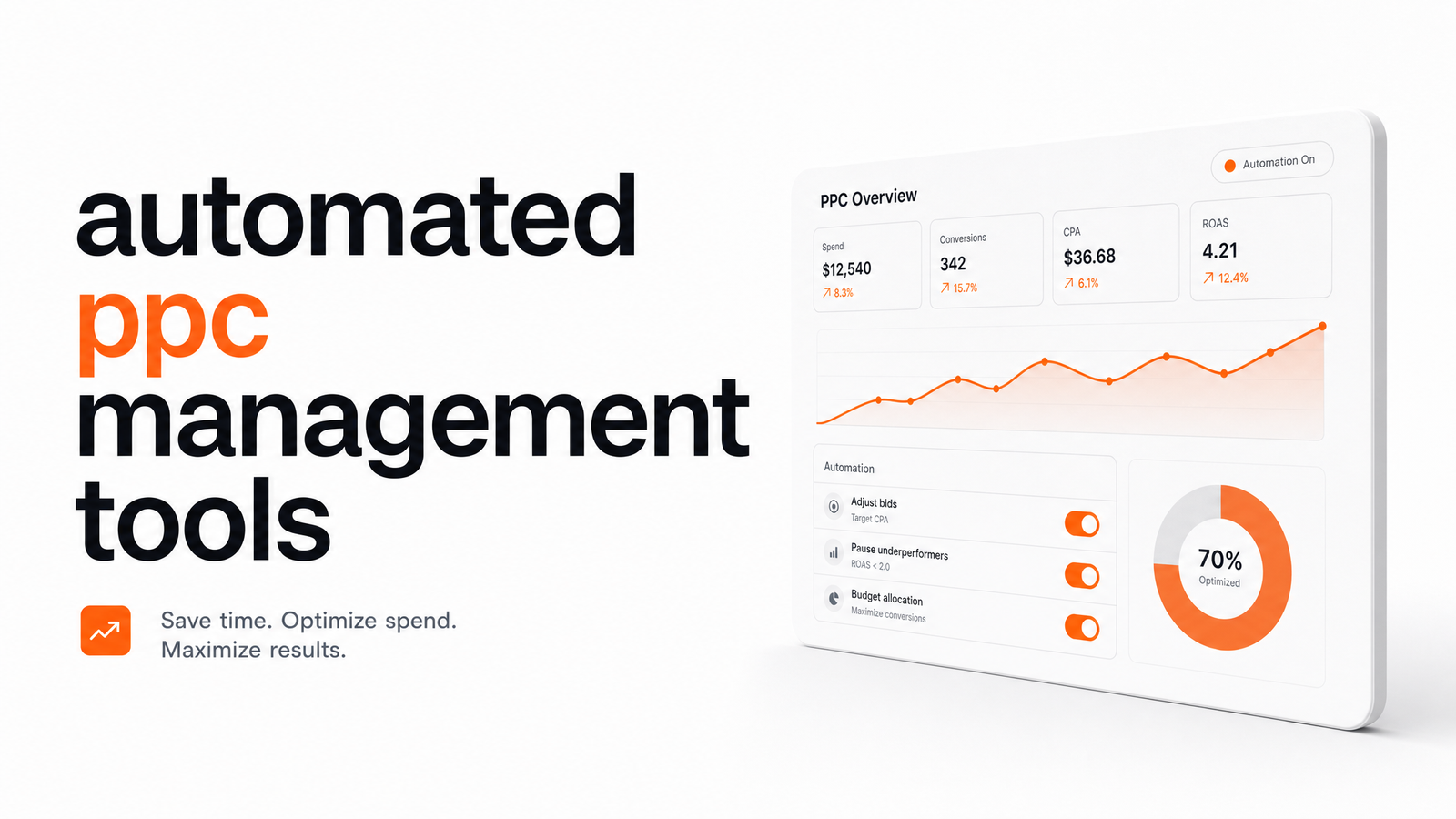
Every vendor in paid advertising now claims to be "AI-powered," which makes shopping for automated PPC management tools feel like reading marketing copy in a foreign language. The category matters more than any single feature, because the underlying technology determines whether you're buying genuine decisioning power or a set of if-then rules wearing an AI label. This guide gives you a vendor-neutral framework for classifying and evaluating these tools before you book a single demo.
What Are Automated PPC Management Tools?
Not every tool that touches your ad account belongs in the same bucket. It helps to separate three distinct layers.
Automation refers to scripts or rules that execute predefined actions — pause a keyword if cost-per-click exceeds X, raise a bid if conversion rate hits Y. It's fast and predictable, but it only does what you tell it to do.
Management describes unified control across accounts and platforms — a single interface where you can see and adjust campaigns instead of logging into four separate ad consoles. Management tools consolidate visibility; they don't necessarily make decisions for you.
AI-driven optimization is the layer where machine learning models analyze performance signals continuously and adjust budgets, bids, targeting, and creative mix without a human writing the underlying rule. A true automated PPC management tool blends all three: it centralizes management across platforms, automates the routine execution, and layers ML decisioning on top so the system improves outcomes rather than just following instructions. A genuine PPC automation platform should be judged on how much real decisioning happens in that third layer, not on how many dashboards it displays.
The Main Types of PPC Automation Tools
Most tools on the market fall into one of three categories, and figuring out which one you're currently using — or evaluating — is the fastest way to diagnose whether you've outgrown it.
Rule-based bid and budget automation applies conditional logic you configure yourself: raise bids by 10% when ROAS clears a threshold, shift budget when spend pace lags. It's transparent and easy to audit, but it's reactive by design — it can't anticipate demand shifts or test creative variations on its own, and rules multiply into unmanageable complexity as accounts scale.
Single-platform native tools, like Google's Smart Bidding or Meta's Advantage+, use machine learning but only within their own walled garden. They optimize Google spend for Google, and Meta spend for Meta, with no visibility into how budget should flow between channels. That's genuinely useful bid automation, but it leaves cross-channel strategy entirely on the marketer's shoulders.
AI-driven cross-channel orchestration platforms analyze performance across Google, Meta, TikTok, and other channels simultaneously, reallocating budget to whichever platform is producing the best marginal return that week. This is the category built for teams tired of stitching together single-platform tools by hand — and it's where cross-platform ad automation and AI PPC management converge into one system rather than three. The Guideflow breakdown of PPC software categories is a useful companion read for more market context on how these categories are drawn.
7 Capabilities to Look For Before You Buy
Use this checklist as evaluation criteria for any automated bid management tools you're considering, regardless of vendor:
- Predictive budget allocation — the tool forecasts performance and shifts spend before results decline, not after.
- Real-time monitoring — anomalies (cost spikes, tracking failures) surface immediately, not in a weekly report.
- Cross-channel optimization — budget and bidding decisions account for performance across platforms, not just within one.
- Creative generation and testing — the system can produce and rotate ad variations automatically rather than waiting on a designer.
- Transparent reporting — you can see why a decision was made, not just that it was made.
- Human override controls — you can pause, cap, or veto any automated action instantly.
- Scalability — performance holds up as you add accounts, campaigns, or new markets, without a proportional rise in manual oversight.
Genuine AI campaign optimization software will check most of these boxes natively. Tools that only check two or three are usually rule-based automation with a modern interface. The Smarter Ecommerce buyer's guide covers similar ground on predictive allocation and real-time monitoring if you want a second reference point.
Rule-Based Automation vs. True AI Orchestration
The distinction buyers most often miss: an "AI-powered" badge or chatbot interface doesn't mean a tool runs machine learning underneath. Many products are still rule engines — if this metric crosses that threshold, do this action — dressed up with conversational UI. That's not a criticism of rule-based tools; they're honest and auditable. But they can't learn from cross-campaign patterns or anticipate demand the way a genuine ML system can.
True AI orchestration ingests performance data across every connected platform, identifies which signals actually predict conversions, and adjusts strategy in ways no static rule anticipated. Stacking three single-platform bid tools — one for Google, one for Meta, one for TikTok — never produces this, because each tool optimizes in isolation and none see the whole picture. This is the core reason cross-channel orchestration, Promevra's category, tends to outperform stitched-together point solutions at scale: the system reasons about your total budget, not just its assigned slice. For a deeper look, see AI-Driven Campaign Optimization vs. Manual PPC in 2026 and this PPC management software comparison against manual account management.
Common Pitfalls When Adopting Automated PPC Tools
Three concerns come up repeatedly, each with a practical fix.
Losing visibility. Marketers worry that handing decisions to software means losing sight of what's happening in their accounts. The fix is choosing tools with transparent reporting and override controls — visibility and automation aren't mutually exclusive if the platform is built correctly.
Over-trusting automation. No automated system should run completely unsupervised, especially early on. Treat the first few weeks as a calibration period, watching decisions closely before extending more autonomy.
Tool sprawl. Running separate bid tools per platform multiplies login screens, reporting formats, and blind spots between channels — the opposite of consolidation. This is a well-documented PPC automation limitation and usually the strongest argument for switching to a unified orchestration platform instead of adding a fourth point tool to the stack.
Where to Go From Here
Classify what you're currently using — rule-based, single-platform, or true orchestration — then run it against the seven-capability checklist above. If your accounts span multiple platforms and you're tired of manual budget shuffling between them, an automated PPC software for multi-platform campaigns designed around genuine AI orchestration is the logical next step, not another single-channel bid tool. Promevra's Google Ads orchestration approach above PMax and the broader AI marketing automation guide for paid ads are good next reads before evaluating vendors.
If you want to see what genuine cross-platform orchestration looks like in practice rather than piecemeal rule-based automation, see how Promevra's AI creates and manages campaigns step by step, or explore the platform directly at Promevra.
Frequently Asked Questions
What's the difference between PPC automation and PPC management software?
PPC automation typically refers to rule-based execution — bid or budget changes triggered by conditions you set. PPC management software is broader, referring to a unified platform for controlling and monitoring campaigns across accounts, which may or may not include AI-driven decisioning on top.
Do automated PPC tools work across Google, Meta, and TikTok, or just one platform?
It depends on the tool's category. Single-platform native tools like Smart Bidding or Advantage+ only optimize within their own platform, while AI-driven cross-channel orchestration platforms analyze and reallocate budget across Google, Meta, TikTok, and other channels simultaneously.
Is Google's Smart Bidding considered an automated PPC management tool?
Smart Bidding is a single-platform automated bidding tool, using machine learning to optimize bids within Google Ads only. It doesn't manage or optimize spend across other platforms, so it functions as one component of a broader PPC strategy rather than a full cross-channel management solution.
How much time can automated PPC tools actually save compared to manual management?
The time saved scales with how many platforms and accounts you're managing manually — teams juggling separate tools per channel typically spend significant hours weekly on manual budget reallocation and reporting consolidation alone. Genuine AI orchestration removes most of that manual coordination by making cross-channel decisions automatically, freeing marketers to focus on strategy and creative direction.
Will an automated PPC tool replace the need for a marketer or PPC manager?
No — even the most advanced AI orchestration platforms rely on human oversight for strategy, brand judgment, and override decisions. The realistic goal is shifting marketers away from repetitive manual bid and budget adjustments toward higher-value strategic work.
How do I know if a tool is really AI-driven vs. just rule-based automation with an AI label?
Check whether the tool can explain why it made a decision based on learned patterns, rather than simply confirming which preset rule triggered. Genuine AI-driven tools also improve decisioning over time and handle cross-channel tradeoffs automatically, while rule-based tools with an AI label still require you to define every condition manually.