From Promevra · via Rankevra
Promevra Pricing: A Real ROI Framework, Not a Price List
August 6, 2026
Quick answer
Promevra pricing should be compared against agency retainers (10-20%+ of ad spend, $1,500-$15,000+/month) or in-house salaries, not evaluated as a standalone cost. Using a simple ROI framework — time saved plus reduced wasted spend plus performance lift minus subscription cost — most businesses can reach payback within months, consistent with industry data showing $5.44 returned per $1 spent on ma
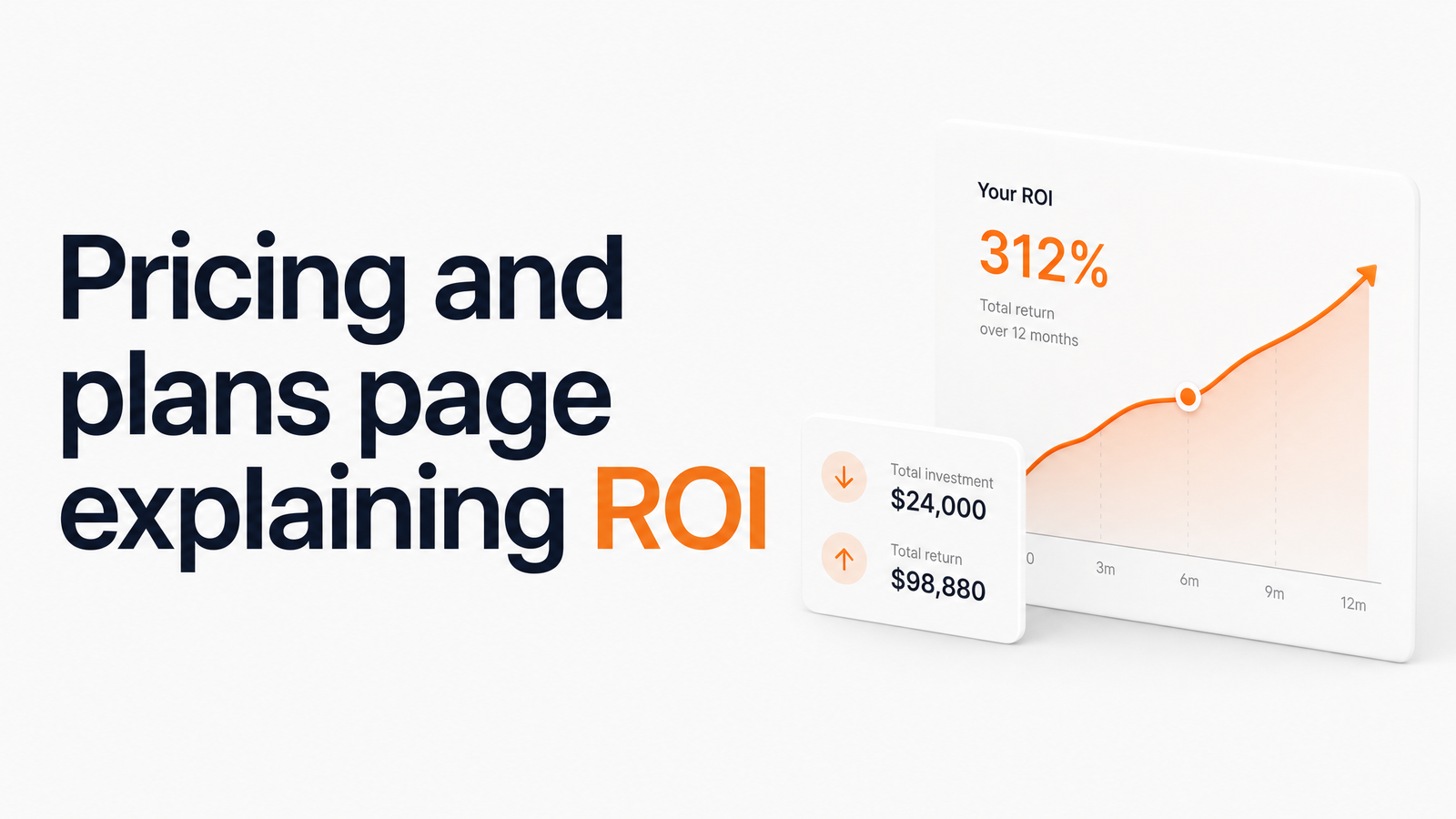
Most people searching for Promevra pricing aren't actually looking for a number. They're trying to figure out whether an AI-driven ad management platform is cheaper, faster, or safer than what they're already doing — paying an agency, paying an employee, or paying in wasted ad spend from campaigns nobody has time to optimize. Pricing only means something in comparison, so before we talk about how Promevra's plans work, let's establish what you're actually comparing against.
What You're Actually Paying For (And Comparing Against)
If you're running paid campaigns today, you're paying one of three ways: an agency retainer, an in-house salary, or your own time. Agency fees for PPC management typically run 10-20%+ of ad spend, with flat monthly retainers landing anywhere from $1,500 to $15,000+ depending on account complexity and spend level, according to the PPC Agency Pricing Guide 2026. Many agencies also blend models — a percentage of spend plus a flat fee, or tiered flat fees that increase as your account grows — as confirmed in this breakdown of PPC management cost structures.
An in-house hire changes the math but doesn't necessarily improve it. A dedicated PPC manager's salary, benefits, and tools stack easily exceeds what most mid-market advertisers spend on media in a month — and that person still needs to sleep, take vacation, and can't manually monitor bids across Google, Meta, and TikTok in real time.
That's the baseline: agency fees vs. software isn't really a fair fight once you account for what software can do continuously that a human, or even a small team, cannot. Promevra's pricing should be evaluated against that full cost stack — not just against a competitor's sticker price.
How Promevra's Plans Are Structured
Promevra's plans are built around a few core variables that determine what tier fits your business: how much ad spend you're managing, how many platforms and campaigns you're running simultaneously, and how much automation and support you need layered on top. This is a common structure across AI ad management pricing generally — the more spend and complexity a platform is optimizing, the more computing, monitoring, and account infrastructure it takes to do that well.
Rather than guessing at numbers here, the more useful exercise is understanding how Promevra pricing works conceptually: it scales with the value it's protecting and generating, not with arbitrary feature-gating. For a detailed look at the mechanics behind what you're paying for — how the platform actually builds and adjusts campaigns — see how Promevra's AI creates campaigns, step by step. For current tier details and what's included at each level, the live plans page is the accurate source — anything else is an approximation.
Calculating Your ROI: A Simple Framework
Here's where pricing stops being an expense and starts being a calculation. A workable ROI framework for AI ad management looks like this:
Net ROI = (Time saved × hourly cost) + (Reduced wasted spend) + (Performance lift in revenue) − Subscription cost
Time saved is real money: hours your team isn't spending on manual bid adjustments, reporting, or campaign audits. Reduced wasted spend comes from catching underperforming ad sets and budget leaks faster than a weekly manual review would. Performance lift is the incremental revenue from better-optimized targeting and creative testing running continuously instead of in batches.
This isn't a theoretical exercise — marketing automation ROI has third-party data behind it. Businesses report an average return of $5.44 for every $1 spent on marketing automation, and 76% see positive ROI within the first year, per current marketing automation ROI statistics. That's a payback period measured in months for most businesses, not years — a meaningfully faster timeline than the ramp-up most agencies need before an account is fully optimized.
For the manual-management side of this comparison broken out in more detail — time, headcount, and error rate specifically — the full comparison of Promevra vs. manual campaign management walks through it.
What's Included (No Hidden Fees to Budget Around)
A recurring frustration with agency billing is the gap between the retainer and what actually lands on the invoice. Setup fees, overage charges once you exceed a spend threshold, and scope-creep billing when you add a platform or campaign type mid-contract are all common in the agency world, per the same PPC agency pricing research cited above.
A software subscription model is built differently. Transparent pricing means the number you see is the number you budget for — no setup fees to negotiate around, no surprise line items for adding a campaign. That doesn't mean every platform is equal on this front, which is why it's worth reading a buyer's framework for evaluating automated PPC tools before committing to any vendor, Promevra included. And since you're handing over ad spend and account access, it's reasonable to check how a platform handles that responsibility — see Promevra's security practices for that trust layer.
Which Plan Fits Your Business
The right starting point depends on where you are, not on chasing the lowest number:
- Small businesses testing paid ads should look for the entry tier built around lower spend and fewer connected platforms — the goal is proving the model works before scaling spend. This is usually the answer to "which Promevra plan" fits a business running its first serious campaigns.
- Growing brands managing multiple platforms (Google, Meta, TikTok simultaneously) need a tier with broader platform support and more automation depth, since the value compounds as campaign count and cross-platform data grow.
- Agencies managing multiple client accounts have different needs entirely — multi-account visibility and controls matter more than any single account's spend level. Agency multi-account pricing structures tend to scale differently than single-brand plans, so this is a case where a direct conversation or a look at the live plans matters more than a blog estimate.
The best plan for a small business is rarely the same as the best plan for an agency managing a dozen accounts — matching your actual complexity to a tier, rather than defaulting to the cheapest option, is what makes the ROI math work.
See Your Numbers, Not Just Ours
Every number in this article is a benchmark, not a quote for your account. Your actual payback period depends on your spend level, your current inefficiencies, and which plan matches your setup — and the only way to see that clearly is to run your own numbers instead of estimating from industry averages.
View current Promevra plans and start a free trial or book a demo to see exact pricing and projected impact for your specific ad spend, rather than guessing from a blog post.
Frequently Asked Questions
How much does Promevra cost compared to a PPC agency?
Promevra is a software subscription, while agencies typically charge 10-20%+ of ad spend or flat retainers from $1,500 to $15,000+ per month. Because software pricing isn't tied to a percentage of spend, it often scales more predictably as your ad budget grows. Check the live plans page for exact current pricing tailored to your spend level.
What determines which Promevra plan I need?
The main factors are how much ad spend you're managing, how many platforms and campaigns you're running, and how much automation and support your account needs. Small businesses testing paid ads typically fit entry-level tiers, while growing multi-platform brands and agencies managing multiple client accounts need higher tiers with broader platform support.
How quickly can I see ROI from an AI ad management platform?
Many businesses see positive ROI within months rather than years — industry data shows 76% of businesses achieve positive marketing automation ROI within the first year, with an average return of $5.44 per $1 spent. Actual payback depends on your current wasted spend, team time saved, and performance lift.
Are there hidden fees with Promevra's pricing?
Software subscription pricing is designed to be transparent, unlike many agency contracts that include setup fees, overage charges, and scope-creep billing as accounts grow. The specific inclusions vary by plan, so reviewing the current plans page confirms exactly what's covered before you sign up.
Can agencies use Promevra for multiple client accounts?
Yes, agencies managing multiple client accounts typically need a different pricing structure than single-brand advertisers, since multi-account visibility and controls matter more than any one account's spend level. It's best to review live plans or speak with Promevra directly to confirm agency-specific pricing.
Is Promevra cheaper than hiring an in-house PPC manager?
In most cases, yes — an in-house PPC manager's salary and benefits often exceed what many businesses spend on a software subscription, and a platform can monitor campaigns continuously across platforms in ways a single employee cannot. The right comparison depends on your ad spend and complexity, which is best evaluated with your own numbers in a free trial.