Rankevra Blog
Ahrefs Explained: What It Does, Costs, and Where It Stops
September 20, 2026
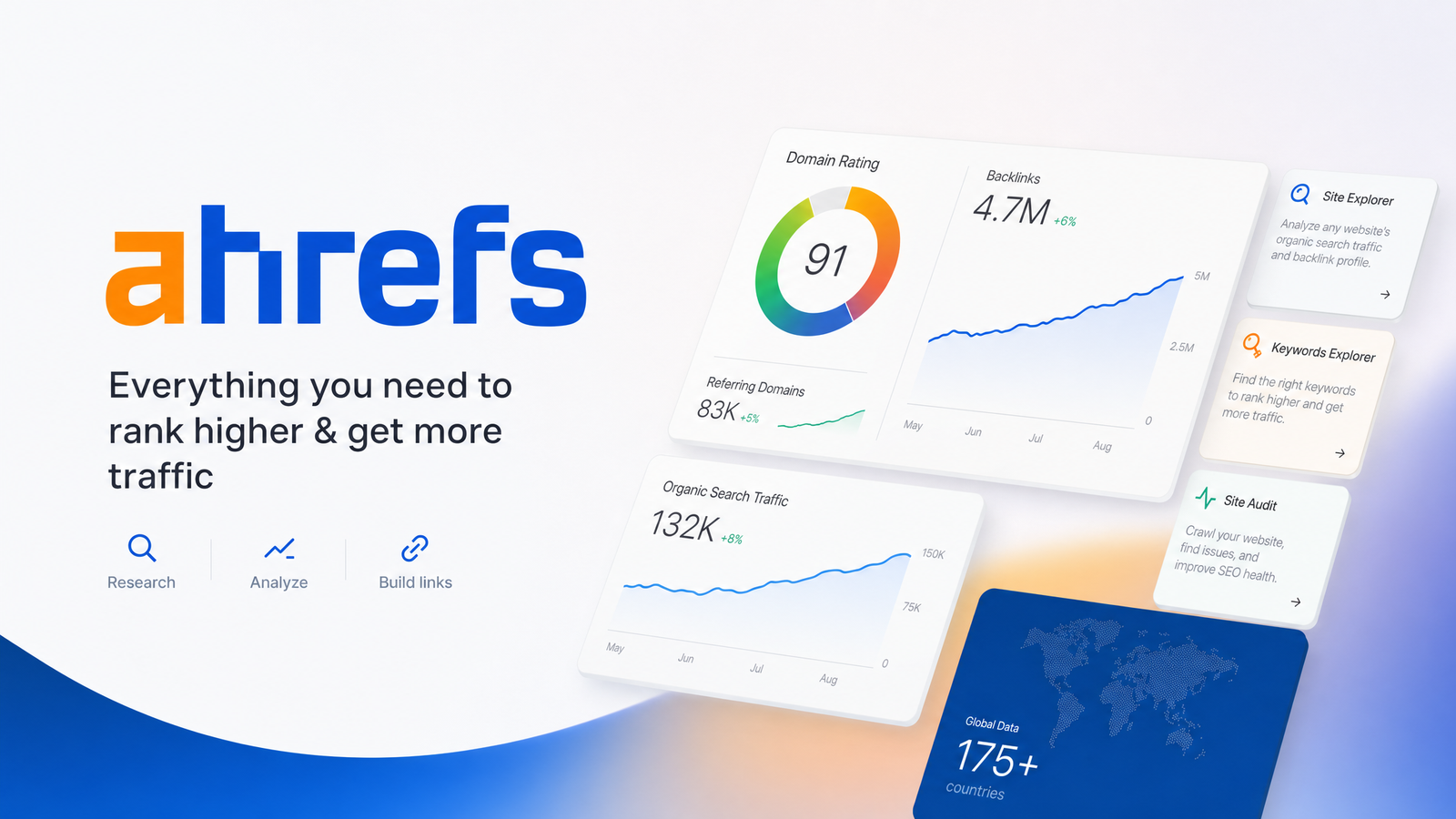
Ahrefs shows up in almost every "best SEO tool" conversation, and for good reason — it's one of the most trusted sources of backlink and keyword data in the industry. But most articles about it fall into uncritical feature lists written by affiliates, or competitor takedowns dressed up as reviews. Neither helps you decide whether it's worth your budget in 2026, or what happens after you find the problems it surfaces.
This is a straight answer. We'll define what Ahrefs is, walk through its core tools, break down real 2026 pricing including the credit system most buyers underestimate, and segment who genuinely gets value from it. Then we'll make one specific point: Ahrefs is built for research and diagnosis, not execution — and that gap is exactly where teams get stuck.
What Is Ahrefs, Exactly?
Ahrefs is an SEO research and data platform built around three pillars: backlink data, keyword data, and site-crawl data. In practical terms, it's a suite of tools that help you understand who's linking to a site, what people are searching for, how a competitor ranks, and where a website has technical problems — all pulled from Ahrefs' own web crawler, one of the largest independent crawlers on the internet.
It's not a content platform, a publishing tool, or a project-management system. It's a lens for seeing the SEO landscape clearly: your site, your competitors', and the keyword opportunities between them. That distinction shapes everything about what Ahrefs can and can't do for your workflow.
Ahrefs' Core Tools, Briefly
Ahrefs bundles five main modules under one subscription, each solving a different piece of the research puzzle.
Site Explorer is the backlink and domain-analysis engine — plug in any URL and see its backlink profile, referring domains, organic keywords, and top pages. It's the tool most people mean when they say "I checked it in Ahrefs."
Keywords Explorer generates search volume, keyword difficulty, and click data for a seed term, across a large database of tracked keywords in multiple search engines. It's strong for discovering volume and competition at scale, though teams increasingly pair it with AI-driven research for intent and content-gap analysis — covered in AI Tool for SEO Keyword Research: What Actually Works.
Site Audit crawls a website and flags technical issues — broken links, slow pages, duplicate content, crawlability problems — scored against an overall health metric.
Rank Tracker monitors keyword positions over time across desktop and mobile, by location. It's dependable but purpose-limited; if rank tracking is your main need, compare it against dedicated options in Best SEO Rank Tracker in 2026: How to Actually Choose.
Content Explorer searches a database of published web pages by topic, showing what content performs well and who's linking to it — useful for content ideation and outreach targeting.
Together, these five tools cover research comprehensively. What they don't cover is what happens next.
Ahrefs Pricing in 2026: What It Actually Costs
Ahrefs pricing runs on a tiered subscription model, and the numbers have moved since the well-documented 2024 price restructuring. Current plans span from a Starter tier for individuals and small sites, up through Standard and Advanced tiers for growing teams, to a custom-quoted Enterprise plan for large organizations with multiple users and higher data needs. For exact figures across each tier, Ahrefs Pricing 2026: Real Cost of Every Plan and Trial Rules has a sourced, itemized breakdown worth checking before you buy.
The part that trips up buyers isn't the sticker price — it's the credit system. Ahrefs allocates a monthly credit budget for actions like Site Audit crawls, rank-tracking keywords, and certain API calls. Run a large site audit or track a long list of keywords, and you can burn through your plan's credits before the month is out, forcing an upgrade or add-on purchase you didn't budget for. Add-ons for extra users, extra data rows, or expanded tracking push the real monthly cost well above the advertised tier price for anyone running audits at scale.
There's also no standard free trial. Ahrefs offers a low-cost trial period for its Starter plan rather than a full-featured free trial, and its free Webmaster Tools product is limited to your own verified sites with a narrower feature set than the paid tools — a distinction confirmed in Ahrefs Cost Breakdown & Alternatives 2026. Budget for a paid commitment from day one, not a free evaluation window.
Cost is also the single most common complaint in user reviews. Third-party sentiment analysis of G2 reviews, summarized in Ahrefs Pricing 2026: Plans, Costs & Hidden Fees, consistently ranks "expensive" as the top-cited drawback — not a dealbreaker, but a signal to model your actual usage before committing.
Who Ahrefs Is Right For (and Who Outgrows It)
Is Ahrefs worth it? For a specific kind of user, yes. Solo SEOs, freelance consultants, and agencies doing backlink research, competitor analysis, and audits for clients get strong, consistent value from the data quality and Site Explorer's depth. If your job is diagnosing and reporting, Ahrefs does that job well.
Ahrefs for small business owners is a mixed answer. A business with one site and limited technical debt can use Site Audit and Rank Tracker productively without hitting credit ceilings. But a small in-house marketing team trying to do research, content production, technical fixes, and reporting all through one subscription will quickly find themselves stitching Ahrefs' output into spreadsheets, briefs, dev tickets, and separate publishing tools — because Ahrefs was never built to close that loop itself.
The pattern is consistent: value is high while you're finding things out, and friction rises sharply the moment you need to act on what you found, especially at any meaningful scale or cadence.
The Gap: Ahrefs Finds Problems, It Doesn't Fix Them
Here's the core issue: Ahrefs' Site Audit will tell you a page has thin content, a broken canonical tag, or a crawl error. Keywords Explorer will tell you there's a content gap around a valuable search term your competitor ranks for. Neither tool writes the replacement content, corrects the canonical tag, publishes the fix, or re-checks that the ranking actually improved afterward.
That's not a criticism so much as a description of the product category. Ahrefs limitations show up precisely at the handoff point between diagnosis and action. A technical audit flags a hundred issues; someone still has to prioritize them, brief a fix, get a developer or writer to execute it, publish the change, and then re-crawl or re-track to confirm it worked. That's four or five separate tools and handoffs for every single finding — a workflow gap covered in more depth in How to Fix Technical SEO Issues: A Priority Action Plan and in Site Audit Tool: What It Checks and How to Use One, which frames what a genuinely complete audit workflow should check and produce.
If you're searching for an Ahrefs alternative, it's rarely because the data is wrong. It's because the findings pile up faster than any team can execute against them manually.
Where Rankevra Fits Alongside or Instead of Ahrefs
This is where Rankevra takes a different position in the stack. Rather than stopping at diagnosis, Rankevra is built as an AI SEO workflow tool that carries findings through to execution: audits that generate specific, prioritized fixes rather than just flagged issues, AI-assisted content creation that addresses keyword gaps, direct publishing, and rank tracking that closes the loop by confirming whether the fix actually moved the needle.
Ahrefs vs Rankevra isn't really an either/or question for most teams — it's a question of where each tool sits in the workflow. Ahrefs' backlink and keyword databases remain genuinely strong for deep competitive research; if backlink analysis specifically is your priority, Best Backlink Analysis Tool: A No-BS Evaluation Framework walks through how Ahrefs stacks up against dedicated alternatives on that single dimension. But once research is done and it's time to act — rewrite the page, fix the markup, publish the update, track whether it worked — Rankevra is designed to be the layer that does that automatically, in one connected workflow instead of five disconnected tools.
For teams that already have Ahrefs and love its research depth, Rankevra can run alongside it as the execution engine. For teams paying for research they don't have the bandwidth to act on, Rankevra can replace the whole stack with a workflow that goes from audit to published fix without manual handoffs.
Frequently Asked Questions
What is Ahrefs used for?
Ahrefs is used for SEO research: analyzing backlinks, researching keywords, auditing technical site health, tracking search rankings, and studying competitor content performance. It pulls data from its own web crawler and keyword databases rather than generating or publishing content itself.
Is Ahrefs worth the money in 2026?
It depends on the job. For backlink research, competitor analysis, and technical audits, Ahrefs delivers strong, reliable data that justifies the cost for freelancers and agencies. For teams that need to act on findings at scale — fixing issues, producing content, and re-tracking results — the value drops because Ahrefs stops at diagnosis and leaves execution to separate tools.
Does Ahrefs have a free trial?
No, Ahrefs does not offer a standard full-featured free trial; it offers a limited, low-cost trial period on its Starter plan instead. Its free Webmaster Tools product exists separately but only covers verified sites you own, with fewer features than the paid subscription tiers.
How does the Ahrefs credit system work?
Ahrefs allocates a set number of monthly credits for actions like Site Audit crawls and rank-tracked keywords, and each plan tier comes with a defined credit allowance. Teams running large audits or tracking long keyword lists often exhaust their credits before the month ends, requiring an upgrade or paid add-on to continue.
What's the biggest limitation of Ahrefs?
Ahrefs finds and reports SEO problems but doesn't fix them — it won't rewrite thin content, correct a technical error, publish a change, or confirm the fix worked. Closing that loop requires separate content, development, publishing, and tracking tools, which is the exact gap execution-focused platforms like Rankevra are built to fill.
What's a good Ahrefs alternative for smaller teams?
The right alternative depends on whether you need deeper research or better execution. Teams that mainly need research can compare dedicated tools by function — backlinks, rank tracking, or keyword research — using the linked evaluation guides above, while teams that need to act on findings faster typically look toward workflow-based platforms like Rankevra that combine auditing, content creation, publishing, and tracking in one place.
Ahrefs remains a solid choice if research and diagnosis are the whole job — but for most in-house teams, the real bottleneck isn't finding SEO problems, it's fixing them fast enough to matter. If you want to see how the same kinds of findings — technical errors, keyword gaps, ranking drops — move automatically from audit to fix to published page to re-tracked result, Rankevra is built to show exactly that.
Keep reading
- Keyword Rank Tracker Software: How It Actually WorksWhat keyword rank tracker software really does, why tools disagree on rankings, and how to connect tracking data to fixes that actually move traffic.
- Best Rank Tracking Software in 2026: Top Tools ComparedCompare the best rank tracking software by use case — budget, agency, enterprise, AI visibility, and all-in-one — and shortlist a tracker in five minutes.
- Search Motor vs Search Engine: What It Really Means"Search motor" isn't a different tool than a search engine — here's the real terminology, how crawling/ranking works, and how to optimize for both.